Stories, Flavours & Travel Insights

Meet the flavours of the world. Here, I share reflections from past tours, interviews with boutique travel experts, destination spotlights, and insights to inspire your next journey. Whether you’re dreaming, planning, or reminiscing, these stories are served with heart, humour, and a deep love of culture and cuisine.

TRAIN TRAVEL IN SWITZERLAND, BELGIUM AND THE UK –  PART 1

Travelling by train might be on the to-do list of many travellers, I know it was on our radar for many years. In December 2025, we made it a reality

Travelling by train might be on the to-do list of many travellers, I know it was on our radar for many years. In December 2025, we made it a reality for a second time, the first being a journey around Italy. Joined by 2 friends, we flew out full of excitement and also some trepidation. Visions of blustering snow, ice-laden lakes with freshly fallen snow wrapping the edges before setting into a mirror that reflected the amazingly beautiful landscape, filled my mind. The indicative temperatures in Zurich were sitting at around 2 degrees with sunny skies and little cloud. Oh yes, did I mention our start point is Switzerland? 

OLYMPUS DIGITAL CAMERA

As a result of where we reside, the flights are long. I remember when we first began travelling, Singapore seemed like an endless flight. Now it is a relaxing short hop before the arduous 14 hours that lie in wait, but do it we must to experience the magnificence of Europe. 

I digress, the purpose of this blog is to chat about the rail journey, the clickety clack of the carriages, even though much softer than in the past. Now it is more of a whirl and certainly a much smoother ride in the beautifully upholstered sofa-style seating. 

Our journey begins in Zurich, and while the day that greets us is one of muted swirling soft grey clouds, there is an atmosphere of holiday spirit unfolding at every turn. We locate our hotel for the next 2 nights with relative ease, and given that it is across the road from the river Limmat as it runs into Lake Zurich, the spot could not have been more ideal and picturesque. The best way to discover a city like Zurich is on foot, and given that the Christmas theme was all around us, there was much to discover. Having found an easier route than that of good old Google, we make our way back to meet our travel companions who were travelling from France after 2 amazing weeks on the road to discover dinosaur footprints and old ruins. 

There is no shortage of Christmas Markets in the centre of town, including the railway station which is also adorned with magically lit baubles. No journey to Switzerland would be complete without a display by the famous Lindt Chocolatier. As we watch the train go around the base of the large tree growing from a hilltop, it seems to stir the inner child in many, judging from the smiles on everyone’s faces. The preferred beverage of Gluwein was doing a roaring trade with the locals, with the temperature sitting around 1 degree in the late afternoon. The challenge for us is the pricing, having to more or less double the Euro to equate to the Australian dollar. We soon realise that this will be a rather expensive holiday. 

Our colleagues arrived amid the festivities, and it is not long before we are retracing our steps back to our accommodation. Suitcases in, we set out to explore the beautiful surrounds in what seems like the early evening but is in fact 4.30 pm. So what is Zurich famous for apart from a chocolate shop on every street corner? To start with, it is called the ‘bank city’ and the global centre for International Finance, Insurance and banking. I am sure though, that this alone would not make you desire to start your journey here. Zurich is however historic with the old town of Altstadt (which is also the name of our hotel) perched on the banks of Lake Zurich with a never ending view of the snow capped Swiss Alps. There is no substitute for being there as opposed to pictures. The misty scenes and ice-covered edges take your breath away. I believe that even in springtime or summer, the scenery would please even the harshest critic. 

The main shopping district known as the Bahnhofstrasse, is upmarket as one would expect. This is where famous European designers can be found along with others you may not have heard of. Shopping is not our favourite pastime, however photography is and there is no shortage of jaw-dropping buildings and river reflections. There are spectacular churches in this part of the world, one of which is the Fraumunster Church built in 853 by Louis the German for his daughter Hildegard and other aristocratic women of the day. Formerly an abbey, it stands with Grossmunster, St Peters and Prediger. They are all amazing introductions to Swiss history. The Fraumunster has a long and interesting tale to tell. 

The days are cold and overcast but nothing can dampen our enthusiasm as we navigate to our next destination Chur, pronounced Ker or Kur. Arriving anywhere during a holiday season has many pluses but a few minuses for good measure. On the plus side is the Mercure City West, home for the next 3 nights. Everything about this hotel is brilliant, from the location next door to a shopping mall, the well appointed rooms and the wonderful staff. Of course all the best plans can have flaws. Of course today is a designated holiday, sad face. Fortunately the Co Op supermarket had everything we needed including wine, a great relief on that score. The foyer of the hotel caters well for late night travellers and holiday makers with a high food bar, a microwave oven, wine glasses, plates and cutlery. With our meals sorted for the next few nights, we lived the high life more or less. The convenience to the rail station is an added bonus. 

For our next immersive activity, we make our way to the gondola which will take us to the top of Brambruesch Mountain at 1600 metres, a snow clad haven high above this lovely city. Check out my gallery for some spectacular images. This mountain is popular with cross country cyclists and the terrain is not for the feint hearted. Hovering over the tracks on the gondola reveals just how daring they would have to be to negotiate the steep and narrow trails.

Putting our Swiss Rail Pass to good use, after rising rather early, we board the train to Tirano just over the border in Italy. We made stops at Pontresina and Samedan both popular ski towns with the locals, including Italians who drive over the border for the day. Once in Tirano, one of our colleagues pointed out that the atmosphere changed as we walked through the town, the prices are lower is a good start. We order a true Italian hot chocolate – one that is literally made of melted chocolate. I remember our first time ordering one of these, it was so thick that the spoon almost stood up on its own. Tirano is the starting point for the famous Bernina Express as it crosses the border into Switzerland and through some of the most magnificent countryside. We have seen pictures of the awe-inspiring via ducts that we are about to cross, but do you think from the train they are easy to photograph? Of course not.

To board the Bernina Express, bookings and reservations must be made ahead of time as seating is on an allocation basis. The bright red train reminded me of the little engine that could, even though the original story book featured a blue engine to be replaced by red years later. The Bernina Express is a UNESCO listed scenic rail journey and takes 4 hours, beginning in either Tirano or Chur. It passes through 55 tunnels and over 196 bridges. The Bernina Pass stands at 2,253 metres and traverses Alpine Glaciers, mountain lakes and the famous Brusio Spiral viaduct, constructed to slow the train as it enters the lower Alps. It is considered to be an engineering marvel for the way in which it negotiates steep gradients. The biggest crossing of them all, the Landwasser Viaduct, reveals the famous Morteratsch Glacier on this remarkable journey. To view our images, don’t forget to check out the gallery and our Facebook page.

One could be forgiven for thinking that the Bernina Express is hard to beat, but we still have the Glacier Express awaiting our arrival in 2 days time. 

As we say farewell to Chur, our next stop is Interlaken for 2 nights. The train trip to Interlaken is via St Moritz, Brig and Spiez, a full day to take in the magnificent Alps as the snow covered valleys littered with small farms and glistening lakes, allow us to pass through in a flash. 

Our accommodation is centrally located, something that is always welcome when you have luggage in tow. Interlaken is a surprise with the city quite spread out.
The main feature is the lake, which is very picturesque as one would expect. We accidentally jumped on a bus that was circling the city before it reached our stop, seeing the city by default. The central part of Interlaken is what I would call delightful, with many chocolate shops – of course -and the last of the Christmas Markets spreading out from the main square. There is an endless supply of restaurants, so tonight we are treating ourselves to a great meal with local beer, and it is warm. Interlaken is the gateway to the UNESCO JUNGFRAUJOCH, also referred to as ‘The top of Europe’, with the highest Alpine glacier saddle at 3,454 metres. Today we are on a journey on the Eiger Express to the highest rail station in Switzerland. Travelling via Grindelwald, another spectacular ski region, the beautiful views just keep coming, but the one that will stay with us is that of the Aletsch Glacier. Also UNESCO listed, it measures over 23 kilometres and contains around 11 billion tons of ice. You may remember the Clint Eastwood film the Eiger Sanction that was filmed primarily here in the Bernese Alps. 

The very top of Jungfrau is covered in misty clouds with the temperature sitting at a balmy minus 12 degrees. There is a sign as we walk through the revolving doors suggesting that we spend no longer than 15 minutes outside. I doubt there will be an argument from us. There is no time to worry about altitude as we pose for the obligatory snaps then dart inside as quickly as possible. It is amazing how being in the sub zero temperature tires you out. After returning to base at Eiger Station and waiting 20 minutes for the connecting train, the only thing to do was marvel at how close the glacier is to the tracks. You may think all glaciers are the same but do yourself a favour and check out my images in the gallery and you will see just how spectacular Aletsch really is and why it is UNESCO listed. 

I would like to say returning to Interlaken is underwhelming, but that would be a lie. As we traverse through many tunnels, cross viaducts seemingly suspended from the hills and dart through clouds still consuming the valley and villages below, the landscape changes are noticeable. The glacial rivers that twist their way along the valley are clearly chilly, and yes, that would be an understatement given the warmth of our comfortable train carriage as it glides effortlessly around bend after bend. It will take something quite spectacular to surpass the experience that we have had today. One more night in the Weisses Kreuz Hotel before our next instalment, journeying to Montreux and our hotel Eden Palace au Lac, located waterfront on Lake Geneva. 

How exciting it is to arrive in Montreux on Christmas Eve. Switzerland and many other European countries celebrate Christmas on the Eve as opposed to the day after. The esplanade is crowded as thousands of people gather to witness Santa flying through the sky. Apart from stopping at one of the many Christmas stalls for food, Glühwein and a souvenir or two, it appears that vying for the best vantage point is paramount. The lake front is wall to wall Christmas market stalls, each offering much the same thing, but there seems to be more food on offer, with the handcrafted items dotted here and there. In the main square, there is a statue of Freddie Mercury showing that famous pose, hand in the air and microphone in the other. 

Christmas Day is cold and bleak, with neither rain nor snow appearing as we join a cruise on Lake Geneva. Sadly, the Château de Chillon on the edge of the lake is closed for repairs. The Chateau dates back to 1150 and was owned by the counts of Savoy. There is a long history attached to the castle, including having a prison. If you are interested in knowing more, you can find all you need to know here – https://www.chillon.ch/en/castle 

The boat ride calls into smaller towns located along the banks of the lake, and we even cross into France for a minute or two. There is so much to see and do in Montreux, being Christmas Day means many of the places are closed. This does not restrict us from strolling along the esplanade once again, peering into shops  – even closed ones, which no doubt is safer – to visiting some of the pleasant parks with statues of famous musicians like Carlos Santana. 

We love to people watch with the perfect place being the Montreux Palace as expensive cars are brought around to the portico for their drivers. Definitely the place to maybe catch someone famous, just not today. This is definitely one city where you can easily while away the time.

Once again, darkness descends rather quickly, normal for this time of year.
We do know that the Casino is open, and everyone loves the liveliness that accompanies one. Here is a tip for those wanting to play a little, you must have full identity with you, such as a passport. 

 This brings me to the QUEEN MUSEUM. Located on the top floor of the Casino Barrière, Queen recorded 7 albums here between 1978 and 1995 at Mountain Studios. A brass record has been set into the floor at the exact place Freddie Mercury stood to record his final album. If you visit Montreux, this is one museum you should not miss. 

Our next challenge is to find a restaurant that is open and not too expensive. To our delight, the perfect spot for Christmas dinner is right around the corner from our hotel, and even though it is not traditional, the Chinese family welcomed us without fuss. Obviously a favourite with locals as well, and judging by our meals, it is easy to see why. 

It is hard to believe that we are nearing the end of our time in Switzerland. After a filling breakfast in the beautifully appointed room overlooking the lake, we say farewell to Montreux and once again board the train as we travel to Geneva. Our hotel is across the road from the station, we are getting really good at choosing our locations. The WARWICK is a fantastic way to spend the last day, an easy walk to the city sites and the lake, which surprisingly is still Lake Geneva. The weather has turned chill, even more so at -2 degrees. I have to say that I honestly thought that 4 layers, including thermals would be warm enough. Alas, even brisk walking could not soothe the chattering teeth. 

Tomorrow begins our journey to Belgium, watch out for our photos and my next blog on Brugge and Ghent. 

Quarzazate and Ait Ben Haddou

THE BLUE MEN – The Kasbahs amidst the shifting sands -A DATE WITH MOROCCO

Do you daydream about exotic destinations, places you have read about in storybooks but never been able to put yourself in the picture? Try if you will to imagine sitting

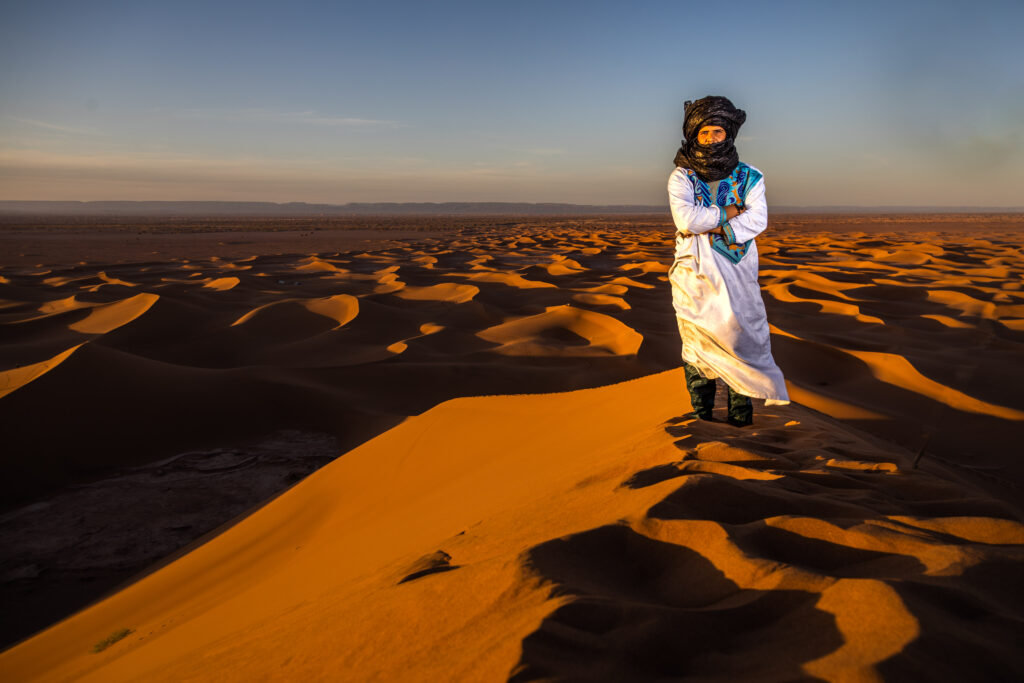
Do you daydream about exotic destinations, places you have read about in storybooks but never been able to put yourself in the picture? Try if you will to imagine sitting in the middle of the Sahara Desert under a heavy dark canvas, the sands beneath you covered in mats of beautifully woven thread adorned in colours of the sky, the oasis and the abundant ochre colour of the shifting sands. You smile at a family of Berber men, women and children as they offer mint tea, with or without milk, but loaded with sugar. If you are wondering if the sugar is optional, the best I can offer is a request for a little less than the standard 2 teaspoons full. The midday sun has made an entrance, rising above the massive dunes on the distant horizon. A small herd of camels are close by, not a care in the world for the strangers who have invaded their space, a place that appears to have no beginning and no end. Such is the view of the rolling sand hills laid out before us and the collective introduction to Morocco.

Outside your guide, a Blue Man, laughs raucously as one local man makes what must be a joke in Arabic. Oh, how we would love to know what the joke entailed, or maybe not. Either way, when our guide is asked to comment, he simply shrugs and relays that it would be lost in translation, something to do with little or no sugar I gathered. Such is the day to day existence of the Berber people and their nomadic lifestyle.

The romanticism of a country like Morocco flows from many different corners often depicted in the exquisite architecture. The mosaic designs are harmonious with no one pattern being the same. Complementing the designs with hand-carved wooden doors and railings, the picture begins to reveal itself in the splendour of both colour and design. Many of the buildings we have visited are known as Riads or garden houses, and it is here you will find exquisite examples of Moroccan design. Due to the arid nature of the country, the designers have brought the outside in with this method, guaranteeing that when the day is hot, the occupants can be assured of a cool respite from the outside temperatures. Most will feature a fountain in the central courtyard, some only small with others holding a prominent place of welcome.

Can you see yourself in the image now, or maybe we should start adding to the adventure in the cities and towns, most with romanticism straight out of our story book. It is difficult to say whether Casablanca or Marrakech are viewed as the best place to begin the journey, and though many have glimpsed the images of the ‘Blue City’ of Chefchaouen, there really is no right or wrong answer to this question as each holds magnificent history and vibes that will have you spellbound. I have always been one for a ‘soft’ landing, somewhere you can ease your way into a holiday.

As the largest city in Morocco, Casablanca still has many Art Deco properties from the early 1900’s. It is no wonder it was a popular place for novelists and film makers during that period. Today it is the hub of commerce with a rich history of blended cultures including European, African and Arab and of course Berber.
To dine in Casablanca is to enjoy a flurry of flavours with some of the best cuisine in the country. One must not miss the famous Hassan II Mosque extending outward over the Atlantic Ocean as it gazes the length of the corniche which comes alive in the late afternoon and evenings with many of the bars and restaurants located along this stretch of ocean. Casablanca still holds a feel of mysticism, especially in the Medina.

As we journey south, we follow the path of the spice traders to the fourth largest city in Morocco, Marrakech. Travelling by car takes two and a half hours as we watch the landscape begin to change into rolling hills. Making a stop in Settat to explore the local souk and maybe your first traditional mint tea, is a perfect introduction to the countryside and a more laid back lifestyle. You can be assured that you will be tempted to make a start to your shopping for anything Moroccan.

Known as the ‘Red City’, Marrakech is famous for the Medina and the sprawling souks that will provide any manner of delightful items. If a tajine is on your list, you will find them in many sizes, if colourful bowls are more enticing, there is no shortage of those as well in a myriad of colours and sizes. If by some chance you fall in love with the local mint tea, you will have a hard time deciding on the colourful glasses used to present the beverage. From lights to spices, food to gold jewellery and clothing, you can be assured that you will walk away with something…. or a lot of items that are hard to resist.

 Jemaa el-Fna is a hive of activity from the late afternoon. The UNESCO Heritage square will not disappoint. A few words of warning, if you don’t like snakes, run fast from the handlers who will wrap one around your neck before you can protest. Of course they want your money to take it off and the offer of a photo comes at a price. The second trap is the ladies ready to pounce with tubes of henna. It all starts with a smile as they grab your wrist and swiftly start embellishing you with squiggles and swirls. No matter what you do or say, they will not be deterred, and whatever you offer, the money will not be enough.  There will be close to a tantrum as they profess an insult at your offer. You can dive down one of the lanes in what is a labyrinth to be explored, to escape if you are quick. In the evening you will have no shortage of entertainment from storytellers and dance performances, to food stalls offering amazing dishes.

Marrakech features many beautifully crafted buildings. Koutoubia Grand Mosque can be entered at no charge. The stunning 16th century Madrasa Ben Youssef, a prayer hall and college has a small entry fee. With so many remarkable places to see, you will need at least two or three days in the city. This can be a great place to do a camel trek through the close by desert of Agafay. Quad biking is very popular so make sure that you have this included in your insurance before you leave home as some may not cover this activity. One of my favourite inclusions on our journeys is that of a cooking class. LA MAISON ARABE and NELIA are but two of the many on offer.
With the ochre desert sands, it can be easy to think that this is the feature of the buildings both outside and in. Exteriors however can be deceiving. Inside you will be transported into another world entirely, one of pastel colours in exquisite mosaic designs. Visiting the remains of the 16th-century El Bardi Palace gives us a strong glimpse of the regions past while providing you with stunning photos. If you can manage sunrise or sunset your shots will be even more spectacular.

As our journey and exploration continues, maybe you are starting to take on the guise of a past desert wanderer with the temptation to wrap yourself up in one of the colourful fabrics being irresistible.

Our dream is no longer a fantasy but a reality as we travel south to the movie capital of the country and one of my favourite desert cities, QUARZAZATE and AIT BEN HADDOU.To reach both destinations is an adventure in itself as we travel through the Tizi N Ticha Pass at an elevation of 2,025 metres in the High Atlas Mountains. The scene that unfolds before us is breathtaking as we glimpse the switch-back road winding tightly as it hugs the barren landscape. Quarzazate is nothing short of remarkable when we consider that it has stood for centuries as a trading route from central Africa to the coast. Located on the edge of the Sahara Desert, it appears to have been made completely from the desert sands as the city blends seamlessly into the surrounding hillscape. Local guides love telling the stories of the original inhabitants, the Berber tribes whose descendants are the current lodgers today.

One of the main attractions, the Atlas Studios, will immerse you in the ‘make believe’ world of the rugged and romantic, the fantastical and historical bygone era. Lawrence of Arabia was filmed here at the entrance to the Sahara Desert, while scenes from Game of Thrones, Gladiator and Star Wars were brought to life in the studios. Opening in 1980, it earned the name ‘Hollywood of the Desert ‘. Entry to the studio will cost 80 Dirhams local currency or around $8 USD.

Close by is the fortified city of Ait Benhaddou, a UNESCO World Heritage listed destination since 1987. The earthen Ksar – a group of smaller dwellings within fortified walls – is located in the Ounila Valley and has also featured in movie scenes, most notably Gladiator and Game of Thrones.

The well-known ‘Road of a Thousand Kasbahs’ leads us to the town of Skoura and another earthen residence, the Kasbah Amridil. The Kasbah is a living museum with generations of the Nissiri family having lived here for over 300 years, very little has changed in that time. The olive press could have been plucked out of a time machine with the bread oven still emitting the aroma of warm bread on the rise. Designed more for day visits than overnight stays, it is still possible to find a bed in the only local hotel outside the walls of the town. While this Kasbah holds our interest, there are so many in the region that you would need longer than a night or two to visit them all.

As we do our best to brush the golden sands from our clothing, we are now on our way North to the city of Meknes. There is an aura that surrounds this 11th century military settlement. One only needs to close their eyes, absorb the aromas as they drift slowly through the air, to imagine stepping back to the very origins of Morocco. Once considered to be the capital of the great Berber tribe known as Meknassa, the nine monumental gates are an indication of the size of the fortification.
One of the most adorned gates is that of Bab Mansour. The mosaics of blues and creams seem to pull the colours of the sky even closer. The imposing doors exemplifying the grandeur of the Hispano and Moorish styles are not lost on photographers, it is just a matter of what angle will capture the elegance. Inside the high walls you will find 25 mosques, an indication of the size of the UNESCO city. Imbued with lush gardens and many fountains, the importance of bringing an oasis to the middle of the desert is well noted.

Meknes is on the threshold of the famous Roman ruins of Volubilis noted as Moroccos most important archaeological UNESCO site. At the height of its popularity, it was a thriving Roman city. Today it is reasonably well preserved with evidence of the Triumphal Arch, Basilica and Roman baths. It is the mosaic floors, not dissimilar to those throughout the ancient worlds of Pompei, that catch your eye. The city was abandoned by most of its inhabitants in 285 AD due to its remoteness and inability to protect itself from Berber attacks. It is slowly being restored after much was destroyed during earthquakes and thousands of years of eroding winds.

Known as the cultural and spiritual capital of Morocco, Fes –or Fez, is our next destination. As with many of the old medinas in Morocco, Fes is another UNESCO Heritage listed site. One of the most notable features as you meander around the city is the distinct odour of the tanneries. This is where a light scarf is a handy thing to have on your person, it is extremely strong and may upset some noses. The dying process however is well worth the discomfort. Best viewed from a higher building, the vats displaying many different colours, are in abundance.

The importance of Fes cannot be dismissed with a cultural immersion of the deepest importance. The medieval Madrassas or religious schools, showcase the magnificent craftsmanship and stunning architecture of their time. Fes el Balis the maze like medina, is not only colourful, it exudes rich traditions of the past. The souks are lively and an experience in their own right as the voices of the stall holders carry through the narrow winding alleyways. Brass, pottery and leather goods are all of the highest quality and very hard to resist. Again we are presented with an imposing gate to frame the old medina. Bab Bou Jeloud or the Blue Gate, stands tall signifying the prosperity that Fes is noted for. Morocco Tourism refers to Fes as the Imperial Pearl and for good reason. In complete contrast, the city is also known for football and golf which may seem odd as Fes is also a popular entry point to visit the Erg Chebbi Dunes of the Sahara Desert.

Our next day begins with a three and a half hour journey to the ‘Blue City’ of Chefchaoen. Located in the Rif Mountains north-west of the country, the city is known for the blue washed buildings throughout the old town. The steep cobbled lanes are popular with photographers who will wait hours for just the right light as the sun moves across the mountains. If you travel there during peak season, it can be hard to take the right shot with hundreds of tourists moving through the narrow streets. The 15th century fortress and dungeon in the Kasbah is located in the main square and a good place to stop and reflect with another cup of mint tea or a local coffee. Depending on your arrival time into the city, one night is enough unless you wish to experience a cooking class in which case a second night would be a good option.

Evidence that time changes everything. The capital Rabat is our next and last stop and we have noticed immense differences since our first visit. The super highways, modern bridges with steel spans and fancy shopping centres are evidence that the country will not be left behind in the expansion of its prosperity. The heritage reflects a strong connection to their Islamic and French colonial past. Bordering the Atlantic Ocean and the Bouregreg River, Rabat still holds true to a strong faith with prayers from the Imam or muezzins echoing from the minarets throughout the city five times a day.

You should not bypass Chellah, the famous medieval Muslim fortified archaeological necropolis first founded around the first millennium BC. Rabat has much to offer including the Hassan Tower, the Royal Palace and Kasbah des Oudayas , the 12th century Almohad Citadel. I have only touched on a small portion of this dynamic country with places like Tangier, the gateway to Spain, and the port city of Essaouria, located on the Atlantic Coast, a favourite for windsurfers and kitesurfing, yet another UNESCO designated region well worth taking the time to explore.

Travel with us to Morocco to experience the gastronomy for which the country is well noted. There are now 15 restaurants in Morocco listed amongst the 1000 best in the world. Taste some of the pastries and Tajines with us throughout your journey. Spices that will captivate you include Ras el Hanout – ‘Top of the Shop’ – containing rose petals and a blend of cinnamon, saffron and cumin. These are just some of the playful flavours used in Moroccan cooking. Do join us.

Step back in time where local villages work today in much the same way as they have for centuries

EXOTIC INDIA

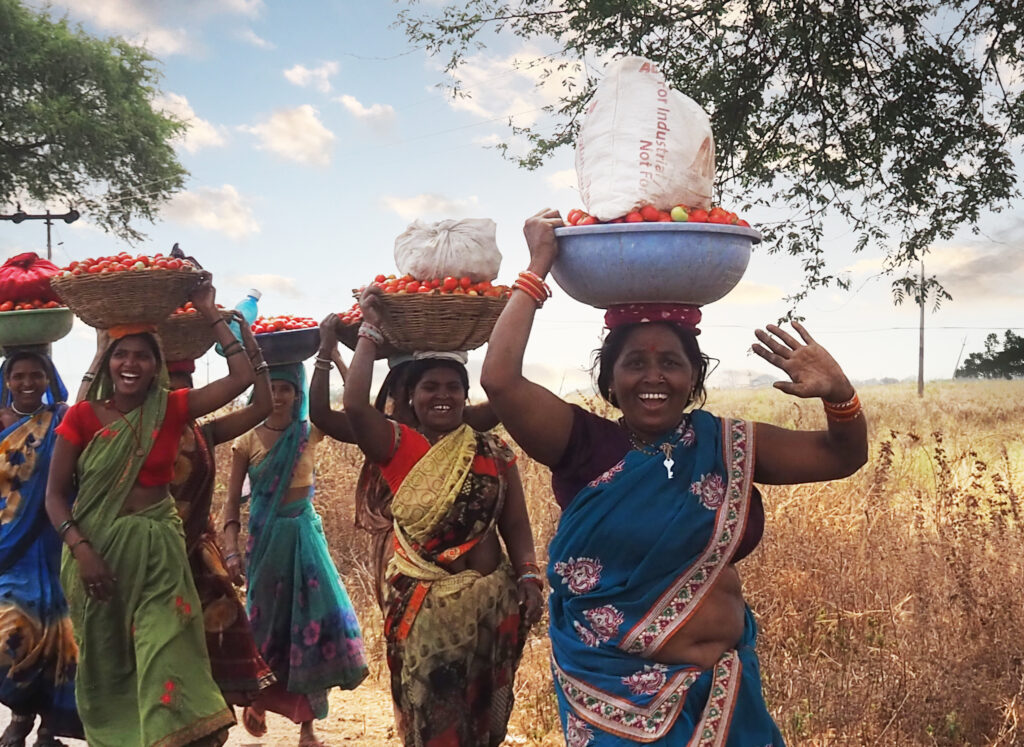
India’s story begins not with the clang of empires or the scrawl of maps, but with a scent — smoky cinnamon curling from a chai stall, turmeric glowing like sun

India’s story begins not with the clang of empires or the scrawl of maps, but with a scent — smoky cinnamon curling from a chai stall, turmeric glowing like sun on the fingertips of a cook, cumin popping in hot oil in a dusty alleyway. This is a land ancient in spirit and eternal in taste, where history simmers alongside masala.
Our journey winds through the north, a realm where legends sleep beneath sandstone fortresses and every bite tells a story older than kingdoms. Her realm feels like a vibrant tapestry of memory and majesty waiting to be stitched into something even more evocative as we draw out the soul of India and her ancient heartbeat, her mesmerizing architecture, and above all, her dazzling flavors.

Delhi — Cradle of Cultures and Cardamom Dreams

In the heart of Delhi, past the honking chaos and sacred rhythms, lies the soul of India. The Red Fort looms in majestic silence, once a gleaming white sentinel to the Mughal empire. Step into Old Delhi’s spice market — Khari Baoli — and let your senses ignite. The air thickens with the perfume of saffron, dried rose petals, and chilli so potent it tingles the skin. The abundance of Marigold flowers – Genda Phool- is used extensively for religious ceremonies or other special events like festivals and weddings. They symbolise new beginnings with the vibrant colours, especially the orange and yellow hues, which are associated with the sun, representing warmth, passion, and creativity.

At Humayun’s Tomb, symmetry and silence enfold you with the sandstone buildings standing proudly in the beautifully sculptured gardens. Nearby, the Qutub Minar pierces the sky like an eternal sundial, its sandstone blush carved with stories of conquest and devotion. Each step is a dance between Mughal and Hindu elegance, and nearby, in Chandni Chowk, the food tells its own tale. Sink into rich butter chicken served in whisper-thin roti or sample street samosas with mango chutney as musicians echo hymns from temples and mosques alike. Let us explore more travelling in the footsteps of the ancient civilisations.

 From Delhi and Uttar Pradesh– the spices will ignite your passions
Here are just some of the delectable dishes offered each day.

Petha (Agra) — A translucent sweet made from ash gourd, as delicate as the marble of the Taj Mahal.
Chole Bhature — Spiced chickpeas with puffy fried bread, often found steaming in street-side stalls of Old Delhi.
Aloo Tikki Chaat — Crispy potato patties doused in chutneys and yogurt, especially around Chandni Chowk.
Kebabs — Seekh kebabs or Galouti kebabs, rich with Mughal influences and found near Jama Masjid.
Mughlai Paratha — Stuffed and pan-fried flatbread with minced meat and egg, tracing back to imperial kitchens.

In Rajasthan (Jaipur, Jodhpur, Bikaner, Jaisalmer)
Laal Maas — Fiery red meat curry with a smoky heat, best savoured near desert campfires.
Dal Baati Churma — Hard wheat balls with ghee-drenched lentils and sweet crushed wheat; Rajasthani soul food.
Gatte ki Sabzi — Besan flour dumplings in a tangy yogurt sauce, spiced for balance and tradition.
Ker Sangri — A desert-foraged vegetable mix, unique to the arid lands around Bikaner and Jaisalmer.
Mirchi Vada — Stuffed chili fritters — bold, crisp, and perfect for roadside nibbles.

As You Reach Varanasi the tastes alter and the experiences continue

Banarasi Paan — Not a dish, but an experience — betel leaves filled with exotic spices and rose essence.
Kachori Sabzi — Deep-fried spicy parcels of lentils, served with potato curry at sunrise near the ghats.
Malaiyo (in winter) — A frothy milk dessert so light it dissolves like a whisper — sold in earthen cups before noon.

These aren’t just meals — they’re emotional landmarks. Every bite links back to a memory, a celebration, a ritual. Let the dishes emerge like hidden ingredients in a sacred recipe, each revealed as your story simmers through alleyways, temples, and twilight rituals as we immerse ourselves in the sensory hush of incense.

Varanasi — Where Time Bathes in Sacred Waters and Cardamom Steam

The moment you step into Varanasi, you will feel a distinct change in the air dense with incense, textured with chants, and soft with the hush of reverence. This is not merely a city; it is a breath between worlds. Along the banks of the Ganges, saffron-robed priests flicker in and out of view like candle flames, performing evening Aarti beneath a sky painted in jasmine smoke.
Hidden within these spiritual folds, the food is just as divine, meant to nourish the soul as much as the body.
Wake early and walk toward the ghats, where vendors serve Kachori Sabzi, spicy lentil-stuffed pastries paired with a bubbling potato curry. Its fiery warmth counters the morning chill and stirs you into wakefulness — best enjoyed with hot masala chai, sweetened with jaggery and cardamom, served in clay cups that dissolve when tossed back to the earth.
In winter, ask quietly for Malaiyo, the city’s whispered secret — a frothy saffron milk dessert that is sold only until the sun rises high enough to melt its delicate bubbles. Let it dissolve on your tongue like temple bells in a morning fog.
And for those with a poetic palate, a post-meal Banarasi Paan beckons — a velvet bundle of betel leaves cradling clove, rose petal, fennel, and magic. It’s more than a mouth cleanser; it’s a ceremony, a farewell kiss to every meal.
Nearby, the sacred town of Sarnath lies curled in banyan shade, where Buddha once offered his first sermon. If Varanasi is a hymn to the gods, Sarnath is their quiet exhale. You will always remember when you immersed yourself in the sensory hush of incense, the clink of brass lamps on the Ganges, and the rich layers of devotion baked into every corner. Be at one with the Ganga as you drift along with the gentle sway of candlelit lanterns, as you write your own journey in your mind.

Agra — Marble Melancholy and Imperial Feasts

As the train pulls into Agra, the city unfurls like a Mughal miniature — intricate, storied, and shimmering with the weight of its past. The Taj Mahal rises in the distance, a marble poem to love and loss, its reflection trembling in the Yamuna River.
But Agra’s soul is not confined to its monuments; it lingers in the aroma of its kitchens. Begin your culinary journey with Petha, translucent pumpkin confections soaked in rosewater and saffron, as delicate as the inlay work on the Taj itself.
For a heartier indulgence, seek out Mughlai Biryani, a dish that carries whispers of royal banquets. Each grain of rice is a story, jewelled with raisins, cashews, and the golden glow of saffron. Pair it with Nihari, a slow-cooked stew of tender meat and spices, traditionally served at dawn to fortify the day ahead.
As twilight descends, find solace in a cup of Noon Chai, a pink-hued tea brewed with Himalayan salt and garnished with crushed pistachios. Sip it slowly, letting its warmth seep into your bones as the city’s lights flicker on like fireflies.
Before you leave, let your taste buds linger on Agra Ka Dal, a humble yet soulful lentil dish that speaks of home and hearth.
Agra is a city of contrasts — of grandeur and simplicity, of love and longing. It invites you to taste its essence, to carry its flavours as memories.

Jaipur — The Pink City’s Royal Palette and Desert Spices

As the sun rises over Jaipur, its pink sandstone walls glow like embers, casting a warm embrace over the city. Known as the Pink City, Jaipur is a symphony of royal heritage, bustling bazaars, and culinary treasures that echo the grandeur of its palaces.
We begin our journey at the Amber Fort, where the grandeur of Rajput architecture meets sweeping views of the Aravalli Hills. As you wander through its ornate halls, imagine the royal feasts that once graced these walls.
For breakfast, indulge in Pyaaz Kachori, flaky pastries filled with spiced onions, served with tangy tamarind chutney. Pair it with a glass of Lassi, a creamy yogurt drink, to cool the desert heat.
You will find it hard to resist our next offering of lunch, calling us for a royal spread of Dal Baati Churma, a traditional Rajasthani dish featuring lentil curry, baked wheat dumplings, and a sweet crumble. Each bite tells a story of resilience and flavour, born from the desert sands.
The taste sensations continue in the afternoon,as you lose yourself in the vibrant lanes of Johari Bazaar, where the sparkle of gemstones and the rustle of silk sarees create a sensory tapestry. You may be hungry yet again as you snack on Ghevar, a honeycomb-like dessert soaked in saffron syrup, as you explore.

As evening falls, the City Palace beckons with its blend of Mughal and Rajput architecture. Here, under the starlit sky, enjoy a dinner fit for royalty — Laal Maas, a fiery red mutton curry, accompanied by Bajra Roti, a millet flatbread. The flavours are as bold and regal as the city itself.
Before you leave, let the desert winds carry you to Nahargarh Fort, where the city sprawls below like a jewel-studded carpet. Savour the moment with a cup of Masala Chai, spiced with cardamom and ginger, as you bid farewell to Jaipur’s royal charm. Jaipur is not just a city; it is a canvas painted with the hues of history, culture, and cuisine. It invites you to step into its story and to taste its legacy.

Udaipur — Lakeside Elegance and Romantic Flavours

As the train glides into Udaipur, the city unveils itself like a shimmering jewel — its lakes reflecting the sky, its palaces whispering tales of romance and grandeur. Known as the City of Lakes, Udaipur is a symphony of water, marble, and culinary artistry.
Begin your journey at the City Palace, a sprawling complex that offers panoramic views of Lake Pichola. As you wander through its ornate halls, imagine the royal feasts that once graced these walls.
For your first meal of the day, indulge in Poha, a light and flavorful dish of flattened rice, spiced with turmeric, mustard seeds, and garnished with fresh coriander. Pair it with a glass of Chaas, a refreshing buttermilk drink, to cool the morning heat.
Lunch calls for a lakeside dining experience with Rajasthani Thali, a platter that showcases the region’s culinary diversity — from spicy curries to sweet desserts. Each bite is a journey through Udaipur’s rich heritage. Udaipur was the choice destination for the James Bond epic movie, Octopussy. The Lake Palace is a journey in itself, where once Royalty bathed in the reflection of magical gardens.

In the afternoon, take a boat ride on Lake Pichola, where the gentle ripples and the sight of the Lake Palace create a dreamlike atmosphere. Snack on Mirchi Vada, spicy chili fritters, as you soak in the views.As evening falls, the Bagore Ki Haveli beckons with its cultural performances and historic charm. Here, under the starlit sky, enjoy a dinner of Gatte Ki Sabzi, a traditional Rajasthani curry made with gram flour dumplings, accompanied by Bajra Roti, a millet flatbread.

Before you leave, let the lakeside breeze carry you to Sajjangarh Monsoon Palace, where the city sprawls below like a jewel-studded carpet. Savour the moment with a cup of Masala Chai, spiced with cardamom and ginger, as you bid farewell to Udaipur’s romantic allure.
Udaipur is not just a city; it is a canvas painted with the hues of history, culture, and cuisine. It invites you to step into its story, to taste its legacy, and to carry its spirit with you.

Jodhpur — The Blue Symphony of Valleys and Spice

Nestled into the valley, Jodhpur’s blue-white washed buildings shimmer like a dream under the desert sun. Known as the Blue City, it is a haven of architectural beauty and culinary delights. We begin our exploration at the Mehrangarh Fort, a towering marvel that offers panoramic views of the city’s azure expanse. As you wander through its grand halls and courtyards, imagine the echoes of royal celebrations that once filled these spaces.

Our day commences with the delectable Mawa Kachori, a sweet pastry filled with dried fruits and nuts, paired with a refreshing glass of Buttermilk, light and tangy. As we embark on a tour of the city, it is easy to be mesmerised by the street vendors and small temples that line the corridors in the old town. Jodhpur never disappoints with a lively nature that carries with it memories of a bygone era.
Cuisine is never far from our minds, and we can now indulge in Ker Sangri, a traditional Rajasthani dish made from dried desert beans and berries, cooked with spices and served with Bajra Roti. Each bite carries the essence of the arid landscape.

In the afternoon, stroll through the bustling lanes of Sardar Market where vibrant textiles, handcrafted jewellery, and aromatic spices create a sensory feast. Snack on Mirchi Vada, spicy chilli fritters that pack a flavorful punch. As evening falls, the Umaid Bhawan Palace beckons with its regal charm. Here, under the starlit sky, enjoy a dinner of Gatte Ki Sabzi, gram flour dumplings cooked in a tangy yogurt sauce, accompanied by Jeera Rice. The flavours are as rich and captivating as the city itself.

Yet again, the desert breeze guides you to Jaswant Thada, a serene marble cenotaph that glows softly in the twilight. Savour the moment with a cup of Masala Chai, spiced with cardamom and ginger, as you bid farewell to Jodhpur’s enchanting allure.

Jodhpur is not just a city; it is a symphony of blue hues, history, and flavours. It invites you to immerse yourself in its story, and to taste its legacy.

Kochi — Where Spices and the Sea Whisper Tales of Old

Kochi, the Queen of the Arabian Sea, welcomes you with open arms and a salty breeze. This coastal gem is a melting pot of cultures, where Portuguese, Dutch, and Indian influences blend seamlessly.
Embracing the authentic culture of the region, we begin our journey at the Chinese Fishing Nets, an iconic symbol of Kochi’s maritime heritage. Watch as fishermen gracefully lower and raise these massive nets, a practice that has stood the test of time.

Once again, our day commences with a local favourite, Appam with Stew. A lacy rice pancake paired with a fragrant coconut milk-based curry, the delicate flavours are a perfect introduction to Kochi’s culinary treasures.
As the day unfolds, explore the Jew Town, a historic neighbourhood brimming with antique shops, spice markets, and the Paradesi Synagogue, one of the oldest active synagogues in the Commonwealth. The old Jewish settlement has changed much since its original beginnings, as many have left for brighter lights. Santa Cruz Cathedral Basilica still attracts visitors to the oceanside city.
Lunch calls for a feast of Karimeen Pollichathu, a pearl spot fish marinated in spices and wrapped in banana leaves before being grilled to perfection. Pair it with Thoran, a dry vegetable dish tempered with coconut, mustard seeds, and curry leaves.

In the evening, take a serene backwater cruise through the lush canals of Alleppey, often referred to as the Venice of the East. As the sun sets, enjoy a dinner of Puttu and Kadala Curry, a steamed rice cake served with a spicy chickpea curry. And to think all of this is accompanied by a magnificent view.

Before you leave, let the aroma of Cardamom Tea and the sound of waves crashing against the shore etch Kochi’s essence into your memory. Kochi is not just a destination; it is a tapestry of flavours, history, and serenity. It invites you to weave its stories into your own journey.

Munnar — The Emerald Symphony of Spices and Mist

Munnar, nestled in the Western Ghats, greets you with rolling hills blanketed in emerald tea plantations and the gentle embrace of misty mornings. This hill station is a sanctuary for the senses, where the aroma of spices mingles with the crisp mountain air. We welcome the new day with a visit to the Tea Museum, where the history and art of tea-making unfold. Sip on freshly brewed tea as you learn about the journey of each leaf from plantation to cup.
We can now indulge in Idiyappam with Egg Curry, a delicate rice noodle dish paired with a rich, spiced egg curry that warms the soul.

As the sun climbs higher, the Eravikulam National Park welcomes us. Home to the endangered Nilgiri Tahr with golden eyes and mesmerising stare, it claims its home and breathtaking views of the Anamudi Peak. Let the serenity of the park envelop you as you wander through its lush landscapes.

Lunch calls for a traditional Kerala feast, featuring Avial, a medley of vegetables cooked in coconut and yogurt, served with Red Rice and crispy Pappadam. Each bite is a celebration of Kerala’s culinary heritage.

We can now take a leisurely stroll through the Mattupetty Dam, where the tranquil waters reflect the surrounding greenery. Snack on Banana Chips, a local favourite, snapped beside tea scented trails.

Before you leave, let the aroma of Cardamom Tea and the sight of mist-covered hills linger in your memory, a gentle reminder of Munnar’s tranquil charm. Munnar is not just a destination; it is a symphony of nature, flavours, and serenity. It invites you to lose yourself in its warmth.

Bikaner — The Gateway to the Thar Desert

Bikaner, a city where the golden sands of the Thar Desert meet the vibrant hues of Rajasthani culture, welcomes you with open arms. Known for its Camel Festival, this city is a celebration of life, colour, and tradition. Our journey places us at the Junagarh Fort, a magnificent structure that stands as a testament to the city’s rich history. Wander through its grand halls and courtyards, each telling tales of valour and opulence. The Maharajas Greeting room has more red and gold than one could dream of. The Palace has its own museum complete with war planes of yet another bygone time.
We now introduce you to Bikaneri Bhujia, a spicy and crispy snack that pairs perfectly with a steaming cup of Masala Chai, breakfast may never be the same after this journey.

Thank goodness we are talking about a culinary immersion as we invite you to indulge in Dal Baati Churma, a traditional Rajasthani dish that combines lentils, baked wheat balls, and a sweet crumbled dessert. We are lucky to have this delectable dish as the main menu for today’s lunch.

This afternoon, we will explore the bustling lanes of Kote Gate, where vibrant textiles, handcrafted jewellery, and aromatic spices create a sensory feast. Snack on Ghevar, a sweet delicacy that melts in your mouth. You might just wish to take a box full with you.

The late afternoon sun provides an ideal backdrop for the Camel Festival as it comes alive with music, dance, and the mesmerising sight of camels adorned in vibrant attire. Let the rhythm of folk music and the aroma of traditional Rajasthani cuisine envelop you as the ships of the desert stride by in adornments that will leave you spellbound.

The desert breeze now guides you to the Thar Desert, one of my favourite places with golden sands stretching endlessly under a starlit sky. Enjoy a dinner of Ker Sangri, a dish made from desert beans and berries, paired with Bajra Roti. The flavours are as rich and captivating as the desert itself.
Bikane is the gateway to the Thar Desert where glamping is the best way to discover the shifting sands, the magnificent wildlife and the excitement of maybe riding a camel through the dunes. The colours change with the time of day and the seasons so you will experience many of the changes all in one day.

As your journey across India draws to a close, let the memories settle like the last notes of a raga, resonating softly in the heart. Each city, a verse; each dish a refrain; each moment, a thread in the tapestry of your adventure.

From the sacred ghats of Varanasi to the marble poetry of Agra, the azure symphony of Jodhpur to the spice-laden breezes of Kochi, and the golden sands of Bikaner to the emerald embrace of Munnar — India has whispered its stories to you.

Carry these whispers with you, not as souvenirs, but as living echoes that shape your own narrative. Let the flavors linger on your palate, the colors dance in your dreams, and the spirit of this land inspire your days.

This is not an ending, but a pause — an exhale before the next inhale, the next journey, the next story.

India awaits, always.

The Romance of CRETE : Where Myth and Magic Meet

Cradled in the southern Aegean, shimmering in sun-drenched hues and steeped in ancient soul, Crete is less a destination and more a state of being. It’s mystical yet grounded, warm

Cradled in the southern Aegean, shimmering in sun-drenched hues and steeped in ancient soul, Crete is less a destination and more a state of being. It’s mystical yet grounded, warm yet wild, generous to a fault—and oh-so-utterly romantic. Like all of Greece, it sings a siren song you simply can’t ignore, but only once you set foot on her soil will you understand how intoxicating that melody really is.

The island pulses with philotimo—an untranslatable Greek spirit of hospitality and honour, stitched into every meal and every smile. For the Cretans, sharing is a sacred act. Whether it’s stories passed down over grilled octopus and raki, or the way they fold you into their lives as if you’ve always belonged, Crete doesn’t host you—it embraces you.

To truly feel its heartbeat, don’t come as a tourist. Come as a guest and come curious. Mingle with the shopkeepers who craft their cheeses by hand, sip coffee with weathered fishermen who know the sea like a second soul, or dance at a village festival until the stars feel close enough to touch.

From the moment you step off the plane, the island’s raw beauty grabs hold. Think: watercolour landscapes on espresso shots. Towering mountains plunge into glassy waters. Olive groves sway to the rhythm of history.

Myth lovers, take note—this is where gods were born. Quite literally. The Ideon Cave on Mount Ida is said to be the birthplace of Zeus himself. And if that doesn’t stir your imagination, perhaps the Venetian-Turkish charm of Chania will. Cobbled alleys and sun-kissed harbours serve up sunsets you’ll remember for a lifetime, best enjoyed with live music and a chilled glass of ouzo in hand.

Need to stretch your legs? The Samaria Gorge hike rewards you with fifteen kilometres of dramatic ridgelines and lush greenery, ending at the peaceful shores of Agia Roumeli. Or unwind in Elafonisi, where pink sands flirt with electric blue waters.

When you’ve earned your appetite, Gramboussa in the northwest is a must-try—family-run, heart-filled, and utterly unforgettable. On the eastern coast, Ferryman Taverna in Elounda dishes up the finest choriatiki salad and fresh-baked bread this side of Mount Olympus.

Still craving charm? Agios Nikolaos lets you wander from lake to beach to port all in one dreamy day. Sip your way down Kitroplatia Beach by daylight, then sway into the night beside Lake Voulismeni, where the nightlife hums with laughter, music, and the occasional philosophical debate.

Offshore lies mysterious Spinalonga Island, once a leper colony and now a hauntingly beautiful reminder of Crete’s layered past. Ferries run every half hour from Elounda, and the ghostly Venetian fortress is as photogenic as it is poignant.

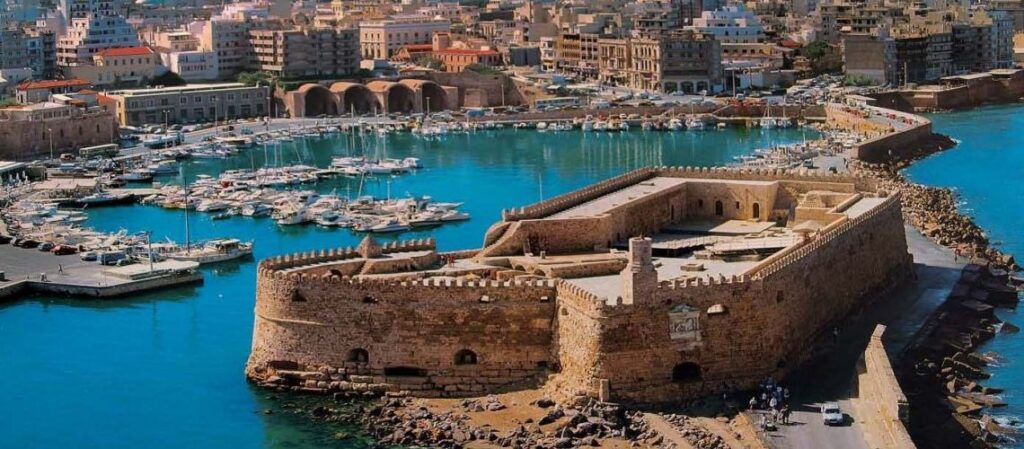
Finish your odyssey in Heraklion, Crete’s capital and proud keeper of Minoan treasures. Here, museums burst with artefacts from the Bronze Age and beyond, while hilltop castles, Byzantine monasteries, and Ottoman mosques whisper tales of conquest and resilience.

Crete is split into four regions, with Chania and Rethymno holding particular allure. It is simply put, a watercolour painting brought to life as the colours dance to the rhythm of the ebb and flow of the Aegean. Crete has many stunning beaches that entice travellers to return time and time again.
The landscape is diverse, and the cuisine exemplary, and when blended together, nature creates some of the most picture-perfect images. For the lovers of history, there is much to be discovered about the ancient Minoan civilisation, like the Knossos Palace ruins. The islands history has been shaped by many civilisations including the Mycenaeans, the Ottoman Turks, the Venetians and the Arabs.

Their cuisine is world famous, some of my favourites are the cheeses accompanied by fresh homemade breads and locally produced wines. Don’t be surprised if a goat or two sidles up for an ear rub, this is just to convince you that all are friendly to visitors, even the wildlife.

Don’t make the mistake of rushing Crete. It’s a place that unravels slowly, each moment richer than the last. Spring (May to July) and early autumn (September to November) are perfect—when wildflowers bloom and the crowds fade, leaving the island’s magic all to you.

Getting there: Direct flights from Athens are quick and convenient, but the ferry lets the anticipation build slowly—five hours of watching the horizon swell with promise.

TURKIYE’ – A Land of Many Faces and Food Sensations

Turkiye is a land where ancient history mingles seamlessly with vibrant, modern life—a mesmerising tapestry of sights, sounds, tastes, and aromas. Its culinary heritage extends its rich cultural history, shaped

Turkiye is a land where ancient history mingles seamlessly with vibrant, modern life—a mesmerising tapestry of sights, sounds, tastes, and aromas. Its culinary heritage extends its rich cultural history, shaped by centuries of trade, conquest, and a blending of diverse influences. A food tour through Turkey is not just a journey for your taste buds—it’s an immersive experience that engages all senses, inviting travellers to indulge in the heart and soul of this incredible country.

We begin this journey in the capital, the well-known city of Istanbul, our Gateway to our ‘Gastronomic Adventure’.

 Istanbul is a city that straddles two continents and embodies the richness of East meeting West. Here, the famed Spice Bazaar, known as Mısır Çarşısı, is a dazzling explosion of colour and a plethora of aromas, where countless stalls overflow with exotic spices, dried fruits, nuts, and teas. When you plan your visit, be prepared for a slow and immersive wander as you encounter the bazaar’s labyrinthine of bustling aisles, nothing in this market should be rushed. The heady scent of cinnamon, cardamom, and dried rose petals envelops you, and it can be easy to be caught up in the vibe and charismatic stallholders who will try to entice you to sample their wares before you face the onslaught of pressured purchasing. The market feels alive—vendors beckon with their musical calls, offering samples of sumac and saffron, promising to transform your dishes into masterpieces. If you have ever tried these exotic spices, you will agree with their resulting tastes. 

Istanbul’s streets are a treasure trove of culinary delights. Begin your morning with a steaming glass of Turkish tea, perfectly paired with a slice of freshly baked simit—a sesame-crusted bread that’s chewy, slightly crisp, and thoroughly comforting. For lunch, indulge in balık ekmek, the city’s iconic fish sandwich sold along the banks of the Bosphorus. Picture succulent grilled mackerel, generously tucked into crusty bread and garnished with tangy onions, fresh greens, and a squeeze of lemon. A stroll across the Galatea’s ‘blue’ bridge will bring you to the famous fish markets, where you will find wonderful restaurants all serving fabulous lunches and dinners. The smell of the freshly caught seafood in the market can be quite overpowering, but the variety available makes a visit a must when in the city. 

The Galata Bridge spans the Golden Horn of the Bosphorus and is iconic amongst the locals and visitors alike. Walk the top tier and watch the fishermen by the hundreds as they dangle their lines into the clear waters below in the hope of catching their day’s lunch. The real appeal of the bridge is what lies beneath. Both sides are lined with restaurants waiting to lure you into their establishments with the promise of cheap beer and expensive food. The view though, may just be worth the food prices.

In the evening, Istanbul’s rich culinary tapestry reaches its zenith at places like Asitane Restaurant, where Ottoman-style dishes transport diners back to the imperial kitchens of the Topkapı Palace. Their Kuzu Güveç, a slow-cooked lamb stew with apricots and almonds, is a shining example of how sweet and savoury in these masterfully harmonised dishes can be.  Turkish cuisine certainly is the epitome of blending to create exquisite dishes no matter what your tastes.

Our next stop is the Anatolian Heartland where you will discover history on a Plate.

As you venture into central Turkiye, the city of Konya offers a spiritual and culinary sanctuary. Known as the home of the whirling dervishes, Konya is steeped in mysticism and tradition. Here, you’ll encounter etli ekmek, a thin, flatbread topped with minced meat, tomatoes, and peppers—a humble yet divine dish that’s cherished in the region. Served warm and fresh from the oven, every bite of etli ekmek feels like a connection to the roots of Anatolian life. Sit at one of the outdoor cafés or restaurants and watch the remarkable scenery unfold, adding to the mystic warmth that the Anatolian people are renowned for. 

The nearby region of Cappadocia invites visitors into its magical, moonlike landscapes, but the food here is equally enchanting. Local specialties such as testi kebabı, a clay pot stew, are prepared using ancient cooking techniques. Picture a sealed clay pot, bubbling with tender chunks of meat, tomatoes, onions, and garlic, broken open tableside to release a fragrant steam that tantalises the senses. This style of cooking is something you will not see everyday. TIP: Have your camera ready. 

In Cappadocia, dining is not merely a meal—it’s an experience. Picture yourself beneath the region’s distinctive ‘fairy chimneys,’ sharing an intimate dinner by candlelight while the wind carries hints of roasting lamb and the earthiness of freshly baked bread. For vegetarians, the wafting of spices on the breeze is without a doubt just as delectable. 

The Coastal Regions share sea breezes and sumptuous plates. 

The Aegean and Mediterranean coasts of Turkiye are home to some of the country’s freshest and most vibrant dishes. Known for their olive groves and seafood markets, towns such as Izmir and Antalya entice with their zesty, sun-kissed cuisine. Start your visit by sampling midye dolma, stuffed mussels that are infused with a subtle sweetness of raisins and pine nuts, balanced by the zing of freshly squeezed lemon. Learn about the fascinating ancient history of Antalya and its importance to Turkiye today. 

Dining in these coastal regions is a chance to embrace the artistry of meze, small plates that include everything from creamy hummus to smoky eggplant puree. Let the creamy richness of haydari, a yogurt dip flavoured with garlic and mint, linger on your palate, while your senses dance with the vibrant hues of roasted red peppers and the crunch of freshly baked pita. The importance of food is not only about eating, but as much about the social nature that it accompanies. Food – laughter – and wine, the perfect three. 

For the ultimate seaside meal, head to Kaleiçi Marina in Antalya, where seafood restaurants offer freshly caught fish grilled to perfection. Enjoy an intimate dinner, lit by lanterns that sway softly in the sea breeze, as the tangy aroma of charred herbs and olive oil fills the air.

Gaziantep might be the sweet finale

No food tour through Turkiye would be complete without delving into the culinary treasures of Gaziantep, a city hailed as the gastronomic capital of Turkey. Gaziantep’s kebabs, seasoned with fiery red pepper paste, are served with tangy yogurt and a sprinkling of crushed pistachios. Every bite bursts with bold, complex layers, embodying the spirit of southeastern Turkish cuisine.

But Gaziantep is perhaps most famous for its baklava, a dessert so exquisite it has earned the city international renown. Layers of golden, buttery phyllo – also known as filo –  dough are meticulously stacked with finely chopped pistachios and soaked in sweet, aromatic syrup. The crunch of the phyllo gives way to a melt-in-your-mouth richness that lingers like an echo of sweetness on the tongue.

We now move ‘Beyond the Table’ to a ‘ Journey Through Time’.

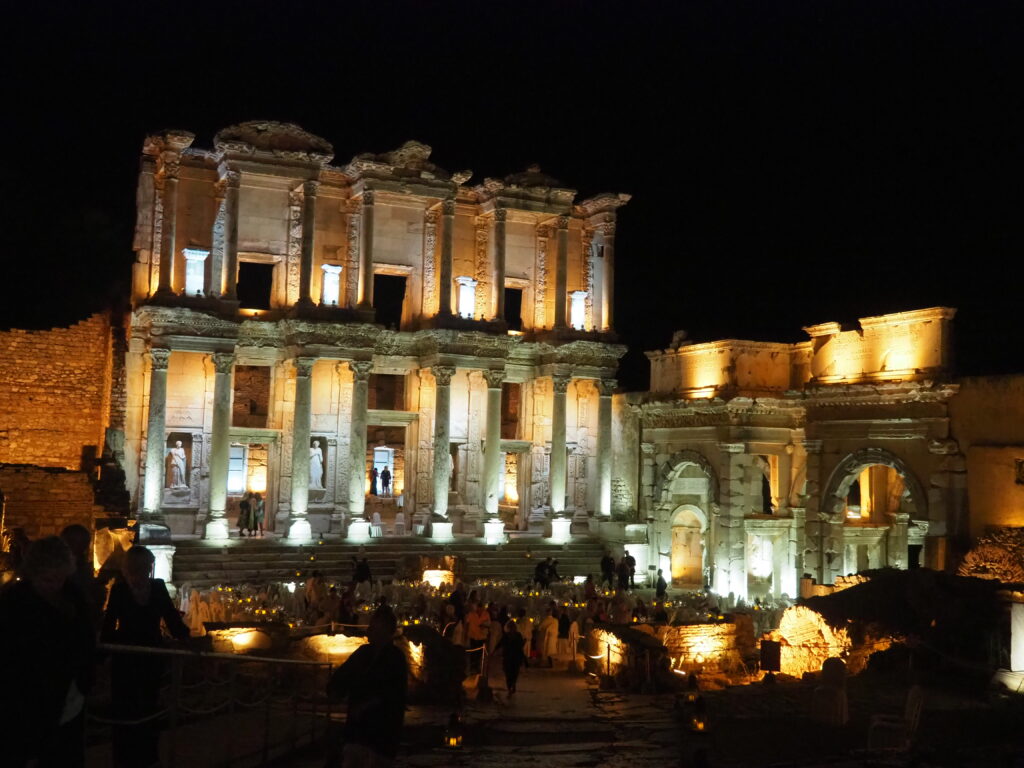
Turkey’s culinary story unfolds alongside its awe-inspiring history. While indulging in delectable dishes, travellers are immersed in the country’s monumental past. From the grandeur of Hagia Sophia in Istanbul to the ancient city of Ephesus, whose marbled streets once bustled with traders and philosophers, Turkey’s landmarks remind us of the civilisations that shaped its cuisine.

Even in the ruins of Pergamon, overlooking the vast Aegean, you can imagine ancient feasts prepared with local herbs, grains, and olive oil—ingredients still beloved today. These historical moments enrich the culinary experience, creating a profound connection between the past and present.

 Crafting Culinary Memories with You on our Food Tours.

As someone passionate about creating evocative food tours, you will be swept away by the sensory delights and cultural depth of Turkiye. We invite you to wander the bustling spice markets of Istanbul, savour traditional dishes prepared with time-honoured techniques, and dine in awe-inspiring settings such as Cappadocia’s ancient caves or Antalya’s sparkling marina.

Every moment of our carefully curated experience will capture the essence of this magical country – the warmth of its hospitality, the richness of its culinary traditions, and the tapestry of history that ties it all together. This is a land where the senses come alive, and our tours will become cherished memories for all who join.

Dust off your passport as we set off to explore the richness that Turkiye has to offer. The perfect blend of history, culture, and gastronomic indulgence awaits. Let the taste, aroma, texture, and artistry of Turkish cuisine transport you to a world where every meal tells a story – and may even create a new one. 

The Taste Sensations of SRI LANKA: An Invitation to our Culinary Adventure

Sri Lanka, often called the “Pearl of the Indian Ocean,” enchants visitors with its vibrant landscapes, ancient heritage, and—most enticingly—its kaleidoscope of tastes. The island’s cuisine is a mesmerising tapestry

Sri Lanka, often called the “Pearl of the Indian Ocean,” enchants visitors with its vibrant landscapes, ancient heritage, and—most enticingly—its kaleidoscope of tastes. The island’s cuisine is a mesmerising tapestry woven with spices, traditions, and stories passed down through generations. Here, every bite carries whispers of history, echoes of culture, and the heartbeat of an island that celebrates life through food. Join us on an unforgettable culinary journey that promises to tantalise your palate and immerse you in the soul of Sri Lanka.

The Symphony of Spices

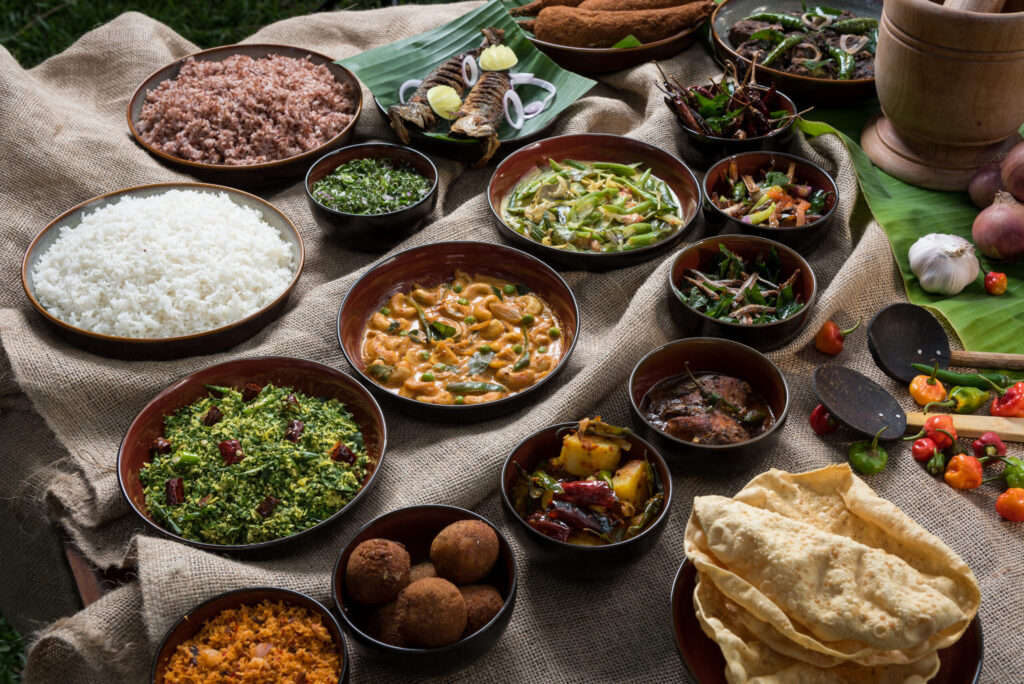
Sri Lanka’s cuisine owes much of its allure to the symphony of spices cultivated in its fertile soils. Cinnamon, the island’s pride, has been revered since antiquity, drawing traders from as far afield as Arabia and Europe. Cardamom, cloves, and nutmeg add their aromatic notes, creating a medley that elevates simple ingredients into masterpieces.

Imagine the earthy warmth of a curry crafted with freshly ground turmeric, the fiery intensity of dried red chillies, and the subtle sweetness of coconut milk—a harmonious balance that defines many Sri Lankan dishes. But it’s the mastery of tempering spices that transforms everyday meals into unforgettable taste experiences. The sizzling of mustard seeds and curry leaves in hot oil releases an aroma so intoxicating, it feels like a prelude to magic.

Ingredients Rooted in Tradition

Beyond the spices, Sri Lankan cuisine shines with its use of locally sourced, fresh ingredients. Rice, the staple grain, is not just food—it’s a cultural cornerstone, nourishing the body and soul. Complementing the rice are lentils, known as “parippu,” in the form of velvety dhal curry that radiates comfort.

Seafood lovers rejoice in the abundance of fish, prawns, and crab brought daily to market by local fishermen. A must-try is the iconic Ambul Thiyal, a tangy fish curry steeped in a paste of goraka (a sour tropical fruit) and aromatic spices, slow-cooked to perfection. For the vegetarian at heart, jackfruit curry—called “kos”—offers a meaty texture and rich flavour that surprises and delights.

Then there’s the beloved coconut: grated, blended, or transformed into oil, it adds creaminess and depth to dishes. Whether it’s Pol Sambol—a fiery coconut relish bursting with chilli, onion, and lime—or Kiribath, milk rice cooked to ceremonial perfection, coconut remains a quintessential ingredient.

Regional Culinary Gems

Sri Lanka’s cuisine is as diverse as its landscapes, with each region offering distinct taste treasures. The southern coast invites you to relish fresh seafood paired with signature spice blends. Galle’s street markets are brimming with delicacies like hoppers—bowl-shaped pancakes made from fermented rice batter and coconut milk, perfect for scooping up spicy curries.

In the hill country of Kandy, the aromatic spices grown in the lush gardens find their way into elaborate rice-and-curry spreads. Pair your meal with a cup of Ceylon tea, savoured amidst views of emerald tea plantations.

The northern city of Jaffna showcases a bolder take on Sri Lankan cuisine, with fiery curries enriched by Tamil influences. Expect dishes like Kool, a hearty seafood soup, and Pittu, steamed cylinders of rice flour layered with coconut.

A Feast for the Senses – Bringing a Strong Bond Between Food lovers

Sri Lankan cuisine engages all the senses, offering not just taste but texture, aroma, and visual artistry. The crunch of freshly fried cutlets, the velvety smoothness of coconut milk curries, the brilliant reds and yellows of spice blends—it’s a sensory symphony that captivates at every turn.

Even desserts are a celebration of indulgence. Watalappam, a spiced coconut custard infused with jaggery and cardamom, tempts the sweet tooth, while Curd and Treacle—a creamy buffalo curd drizzled with palm syrup—offers a delightful conclusion to any meal.

Where History Meets Cuisine with a custom that is as old as time

Food in Sri Lanka is not just sustenance; it’s storytelling. The dishes are intertwined with the island’s history, bearing influences from Dutch, Portuguese, Indian, and Arab traders. The famous Lamprais—rice and accompaniments wrapped in banana leaf and steamed—is a legacy of the Dutch Burgher community. Meanwhile, the Tamil tradition shines in dishes like idiyappam (string hoppers) served with coconut gravy.

Dining in Sri Lanka becomes an exploration of heritage, as traditional cooking methods, such as clay pot cooking, are still cherished. These techniques not only enhance the taste but also connect diners to the land and its ancient wisdom.

An Invitation to Indulge with us

We invite you to embark on a culinary adventure with us—a journey that promises to awaken your senses, challenge your palate, and deepen your appreciation for Sri Lanka’s rich tapestry of tastes. Together, we’ll venture into bustling markets, meet local chefs, and explore the art of spice blending. You’ll learn the secrets of cooking dishes like fragrant curries and sambols, and even master the delicate art of hopper-making.

But it’s not just about the food; it’s about the moments—the laughter shared over a steaming plate of rice and curry, the stories exchanged with locals, and the memories made against a backdrop of breathtaking landscapes.

Sri Lanka’s cuisine is a reflection of its people: warm, vibrant, and full of life. Each dish is an invitation to celebrate, to connect, and to revel in the joy of discovery. So pack your bags, bring your appetite, and prepare to be enchanted. The island’s culinary wonders are waiting to welcome you.

Sri Lankan Meal Suggestions:

  1. Breakfast Delights:
    • Egg Hoppers (Appa): Bowl-shaped pancakes made with fermented rice flour and coconut milk, served with a perfectly soft egg in the centre. Pair it with Pol Sambol (spicy coconut relish) and Katta Sambol (onion and chili condiment) for a fiery kick.
    • Kiribath with Lunu Miris: Creamy milk rice cut into diamond shapes and paired with Lunu Miris—a robust mix of red chillies, onions, and lime juice.
  2. Seafood Treasures:
    • Ambul Thiyal (Sour Fish Curry): Cubes of fish marinated in a paste of goraka (a sour fruit) and spices, then slow-cooked for a bold and tangy flavour.
    • Prawn Curry (Isso Curry): Fresh prawns simmered in a rich blend of coconut milk, turmeric, and mustard seeds, garnished with a touch of curry leaves.
  3. Vegetarian Favourites:
    • Jackfruit Curry (Kos Maluwa): Tender green jackfruit cooked in coconut milk with aromatic spices like cinnamon and clove.
    • Wambatu Moju (Eggplant Pickle): Fried eggplant slices marinated in a sweet and tangy sauce made with sugar, vinegar, and mustard seeds.
  4. Regional Specialties:
    • Lamprais: A Dutch Burgher-influenced dish featuring rice, meat curry, brinjal moju, and fried boiled egg, all wrapped in banana leaves and steamed.
    • Kool: A Tamil seafood soup from Jaffna, brimming with crab, prawns, cuttlefish, and vegetables in a spicy, thickened broth.
  5. Dessert & Sweet Treats:
    • Watalappam: A creamy coconut custard infused with jaggery, cardamom, and nutmeg, offering the perfect end to a meal.
    • Kokis: Crisp, flower-shaped deep-fried rice flour snacks that are as delightful to look at as they are to eat.
  6. Street Food Must-Haves:
    • Kottu Roti: A lively mix of chopped flatbread, vegetables, eggs, and curry, tossed together on a hot griddle with a rhythmic clanging that adds to its charm.
    • Fish Cutlets: Spicy and crispy spheres of mashed fish and potato, deep-fried to golden perfection.
  7. Tea Pairings:
    • Ceylon Tea with Rulang Aluwa: Enjoy a cup of world-famous Ceylon tea accompanied by Rulang Aluwa, a sweet semolina fudge made with coconut.

These meals are not just dishes but experiences that tell the story of Sri Lanka’s cultural and culinary richness. They’ll serve as sensory anchors for your guests, creating memories they’ll savour long after the tour ends. 

Embark on a CULINARY ODYSSEY: Exploring GREECE’S Irresistible Flavours and Idyllic Islands

Imagine yourself stepping off a boat onto sun-drenched shores, the air filled with the scent of briny sea breezes and wild herbs. In Greece, food is not just sustenance—it’s a

Imagine yourself stepping off a boat onto sun-drenched shores, the air filled with the scent of briny sea breezes and wild herbs. In Greece, food is not just sustenance—it’s a way of life, a gateway to understanding its rich culture and deep traditions. From bustling cities to serene islands, Greece invites you to indulge in a culinary adventure like no other. Pack your appetite and curiosity as we take you on a journey through the tantalising tastes of Greece, spotlighting islands like Chania in Crete, Naxos, and others that are guaranteed to stir your wanderlust.

The Heart of Greek Cuisine: A Celebration of Ingredients

Greek cuisine thrives on simplicity and freshness, allowing nature’s bounty to shine in every dish. Picture the luscious drape of olive oil over a freshly baked loaf, the zesty brightness of squeezed lemons, or the tangy crumble of feta cheese paired with juicy Kalamata olives. Herbs like oregano and dill, along with earthy garlic and onions, form the aromatic backbone of Greek flavours. And let’s not forget the sweet nectar of Greek honey or the burst of a taste sensation from sun-ripened tomatoes—each bite tells a story of sun, soil, and tradition.

Cheese lovers rejoice! From the iconic feta to the rich graviera and the buttery manouri, Greek cheeses are irresistible companions to fresh bread or sesame-encrusted koulouri. And for those with a sweet tooth, the floral notes of thyme honey paired with crunchy walnuts or drizzled over creamy yogurt are simply divine.

The Islands of Food Sensations: Chania, Crete

Chania, on the island of Crete, is a culinary paradise where ingredients and tastes are deeply rooted in tradition and the island’s fertile land. As you explore Chania’s narrow streets and bustling markets, you’ll encounter dishes that offer a taste of its unique culinary heritage. Some must-try dishes include:

  • Sfakianopita: A flaky, cheese-filled pie topped with honey, showcasing the perfect balance of savoury and sweet.
  • Chochlioi Boubouristi: Snails pan-fried with rosemary, olive oil, and vinegar—a delicacy that reflects Crete’s bold flavours.
  • Kalitsounia: Small pastries stuffed with wild greens or cheese, often served during festivals.

Seafood lovers will revel in the offerings of Chania’s Tavernas. Imagine enjoying:

  • Grilled Sardines: Freshly caught and simply seasoned, they’re an unforgettable coastal treat.
  • Octopus Carpaccio: Thinly sliced octopus marinated in olive oil, lemon, and herbs, bursting with Mediterranean goodness.

Naxos: The Island of Abundance

Naxos, the largest of the Cyclades, is a culinary treasure trove. The island’s rich soil nurtures exceptional produce, from potatoes to lemons, and its gastronomic gems reflect the bounty of its land and sea. On your food tour, be sure to try:

  • Kopanisti: A tangy, spicy cheese spread made from goat or sheep milk, served with crusty bread or crackers.
  • Kakavia: A hearty fisherman’s soup combining the freshest catch with olive oil, garlic, and vegetables.
  • Roasted Lamb: Often marinated with local herbs and slow-cooked to perfection, offering a taste of Naxos’ pastoral traditions.

For dessert, treat yourself to Melopita—a honey pie that showcases the island’s famous thyme honey in every bite. And don’t forget to sip on Naxos’ unique Citron Liqueur for a flavour burst that captures the spirit of the island.

Santorini: Blessed with rich Volcanic Soil

Santorini offers a culinary palette that’s as distinctive as its landscape. Highlights include:

  • Santorini Fava: Creamy yellow split pea puree flavoured with onions, olive oil, and lemon.
  • Tomato keftedes: Fried tomato fritters made from the island’s sweet cherry tomatoes, bursting with natural flavour.
  • Grilled Calamari: Tender squid cooked over hot coals, seasoned with olive oil and sea salt.

Pair these delicacies with a glass of Assyrtiko wine, crafted from grapes grown in Santorini’s mineral-rich volcanic soil.

A Love Affair with the Sea

The sea is Greece’s lifeblood, and its bounty is celebrated in dishes that are as fresh as they are loaded with mouth-watering flavour. Seafood suggestions you’ll want to indulge in include:

  • Garides Saganaki: Shrimp cooked in a spicy tomato sauce topped with feta cheese—a bold and comforting dish.
  • Astakomakaronada: Lobster pasta with a tomato-based sauce, delivering luxury in every bite.
  • Fried Anchovies: Crispy and golden, perfect with a simple spritz of lemon.

Enjoy these dishes at a waterfront taverna, where the ocean is within your grasp and you can blend the ambience beautifully with Greece’s stunning vistas.

The Greek Table: A Gathering of Souls

Greek dining is more than just a meal; it’s an experience that brings people together. Long tables under vine-covered pergolas, the hum of conversation and laughter, the clinking of glasses—all of these paint a picture of Greece’s legendary hospitality, or “filoxenia.” Meals are unhurried, inviting you to savour every bite, every moment.

Each island offers its own version of this hospitality, welcoming you with open arms and the promise of culinary discovery. Whether you’re exploring bustling markets, taking a cooking class with a local chef, or simply enjoying a leisurely meal by the sea, you’ll feel like part of the family.

Join Us on a Culinary Journey

Let the tastes of Greece seduce your senses and the islands captivate your heart. From the verdant hills of Crete to the sun-drenched shores of Naxos, from the volcanic splendour of Santorini to the cosmopolitan allure of Mykonos, each destination offers a world of culinary wonders waiting to be discovered.

Join us on a food tour that’s more than just a journey; it’s a celebration of life, flavour, and connection. Savour the exotic tastes, explore the vibrant culture, and create memories that will linger long after the last bite.
Greece is calling. Will you answer with your appetite? Yamas! 

CUBA – A Bountiful Land Rich in Flavours

Join us on this ‘Culinary Journey to Paradise’. Step into a world where the rhythm of life mirrors the seductive beat of salsa, where the aromas and accents are vibrant,

Join us on this ‘Culinary Journey to Paradise’.

Step into a world where the rhythm of life mirrors the seductive beat of salsa, where the aromas and accents are vibrant, and meals are crafted with love. Cuba—a sun-soaked island steeped in history and infused with intoxicating energy—is a destination like no other.
More than just an island retreat, Cuba offers a culinary adventure that tantalises your senses, creating memories that linger long after the last spoonful. From the sapphire shores to the lush countryside and the electric energy of Havana, this journey promises an indulgence in both flavour and culture.

Cuban cuisine is rooted in its soil. Fertile and unspoiled, Cuban fields grow an abundance of tropical fruits, vibrant and sumptuous vegetables, and aromatic herbs. Organic by necessity rather than design, Cuban produce has a purity of flavour rarely found elsewhere. The zing of freshly squeezed lime, the sweetness of ripe mangoes, the peppery heat of local chilli peppers—every bite tells a story of the earth and the people who care for it.

Sugarcane, one of Cuba’s major crops, lays the foundation for the island’s famed rum. Pineapples, guavas, and oranges ripened under the Caribbean sun add bursts of brilliance to the dishes and drinks they inspire. Meanwhile, coffee plantations, nestled in the misty hills, produce robust, earthy beans that fuel the heartbeat of Cuban life.

Pairing these organic marvels with delectable wines offers an unexpected twist for connoisseurs. Cuban wine producers craft delightful selections that complement local dishes, enhancing the culinary experience in surprising ways.

Seafood by the Beach: A Symphony of Freshness

Imagine dining on the coastline, where the crystal-clear waters of the Caribbean lap against golden sands. Cuban seafood is a revelation—harvested straight from the ocean, prepared simply to let its natural characteristics shine. Feast on lobster tails grilled with garlic and lime, or indulge in fresh shrimp sautéed with aromatic herbs.

In beachside towns like Varadero, the fusion of sea air and culinary artistry is truly transformative. A must-try is enchilado de mariscos, a seafood stew with shrimp or crab cooked in a tomato-based sauce with a whisper of chilli and garlic. Pair this with a chilled white wine, and you’ll find yourself enveloped in the essence of the island.

The Sweet Allure of Baracoa

Tucked away in the eastern province, Baracoa is a treasure trove for adventurous foodies. Known as the land of chocolate and coconut, Baracoa offers tastes that are distinctly Cuban yet uniquely its own. The region’s famed dish, cucurucho, is a coconut, honey, and tropical fruit concoction served in palm leaves—a celebration of the island’s abundant resources.

Baracoa’s chocolate is legendary. Visit a cocoa plantation, where you’ll witness the journey of cacao from bean to bar, and experience rich, velvety creations that melt on your tongue. Pair it with a robust cup of Cuban coffee for a perfect sensory duet.

Be sure to try bacán, a savoury delicacy made with grated plantains, fresh coconut milk, and spices, wrapped in banana leaves and steamed to perfection. Baracoa offers not just food, but an immersion into the layers and traditions that form its cultural backbone.

Havana: See it – Dance it – Ride it – and Taste it

The capital city is a carnival of sights, sounds, and tastes. Cruising through Havana’s streets in a classic convertible, you’ll hear local bands striking up a melody, Spanish lyrics wafting through the air, an invitation to dance. The city’s vibrant energy translates effortlessly into its cuisine.

Start with a ropa vieja at one of Havana’s acclaimed restaurants—a tender shredded beef dish cooked in a tomato and wine-based sauce, served with white rice and maduros (sweet plantains). Sample tostones, crispy twice-fried green plantains, perfect with a generous dollop of garlic dipping sauce. And, of course, treat yourself to a cocktail—an authentic mojito or daiquiri, crafted with Cuban rum, is a rite of passage.

Havana’s food markets and street vendors are a playground for culinary adventurers. Pan con lechón sandwiches and freshly made guava pastries are irresistible snacks on the go. Every bite feels like a vibrant thread woven into the city’s bustling fabric.

Homestays: The Heart of Cuba

To truly understand Cuba, stay in a casa particular—a Cuban homestay. These charming accommodations allow you to immerse yourself in the warmth and hospitality of Cuban families. Hosts often prepare meals with traditional recipes passed down through generations, showcasing the essence of Cuban home cooking. Sit around a communal table, sharing laughter and stories over plates of rich black beans, fluffy rice, and grilled meats.

Such stays offer more than meals—they provide connection and authenticity, leaving travellers with a deep appreciation for Cuban culture and the people who shape it.

Beyond the Plate: A Cultural Feast

Cuba’s food is inseparable from its culture, music, and history. As you linger over your meals, you’ll encounter influences from Africa, Spain, and the Caribbean, woven together in a tapestry of flavour. The spices, techniques, and ingredients tell tales of resilience, innovation, and celebration.

Explore local festivals where food is central to the festivities. Witness street processions with dancers, musicians, and vendors offering everything from skewers of freshly grilled meat to rich, sugary treats like churros. Combine these experiences with art galleries, salsa lessons, or a tour of Hemingway’s haunts to round out your sensory immersion.

Your Cuban Culinary Odyssey

A Cuban food tour is an odyssey—a journey not only through tantalising tastes but also into the soul of an island. Every dish connects you to the land, the people, and the culture. It’s about embracing the vibrancy, dancing to the music of life, and allowing yourself to be captivated by the richness of the island.

From coastal feasts to Baracoa’s indulgent creations, Havana’s street food to the warmth of homestays, Cuba invites you to live, eat, and breathe its essence. As your classic convertible rolls to a stop and the sounds of a local band fade into the distance, you’ll find that the true taste of Cuba is not just in the food, but in the unforgettable memories you’ve created along the way.

As Cuba is no ordinary destination, there are some important facts you might like to know. 

Essential Tips for Travellers Exploring Cuba’s Culinary Wonders

  1. Bring Cash, Not Cards Cuba operates mostly on cash, and international credit cards may not always work. Convert your money to Cuban Pesos (CUP) upon arrival, and keep some smaller denominations handy for tipping and street food.
  2. Learn Some Spanish Phrases While many Cubans are welcoming to English-speaking travellers, knowing basic Spanish phrases can enhance interactions, especially when exploring local markets or conversing with homestay hosts. For instance, “¿Qué me recomienda?” (“What do you recommend?”) is a great phrase to use while dining out.
  3. Pack for Comfort. Lightweight, breathable fabrics are essential for the tropical climate. Don’t forget comfortable shoes for walking through bustling cities and uneven countryside paths, plus a reusable water bottle to stay hydrated.
  4. Prepare for Limited Internet Access
  5. Internet connectivity is not as widespread or reliable as in other destinations. Use this as an opportunity to unplug and immerse yourself fully in Cuba’s vibrant culture and food.
  6. Book Homestays Early. Staying in casas particulares (homestays) offers the best way to experience authentic Cuban hospitality and cuisine. Since these can fill up quickly, it’s wise to book well in advance. Of course, the Casa is our go-to and are included on our itineraries. 
  7. Bring Food-Safe Travel Gear A small insulated bag or reusable food containers will come in handy for storing leftovers or carrying treats from local markets. Don’t forget utensils and a multi-purpose corkscrew for wine lovers! Note** we will provide these items on the tour. 
  8. Explore Beyond Havana. While Havana is a showstopper, be sure to venture further afield. Baracoa, Trinidad, Viñales, and Santiago de Cuba each offer distinct culinary and cultural experiences, from chocolate plantations to organic farms. These destinations are included on our tours.
    **Special requests can be made at the time of your enquiry. 
  9. Guided Food Tours We employ the services of a local guide for food tours or cooking classes. This is an excellent way to learn about Cuban ingredients, recipes, and traditions. They often include stops at hidden gems you’d otherwise miss.
  10. Mind Cultural Etiquette Cubans are warm and welcoming, but polite gestures go a long way. Show respect when photographing people or their homes—ask for permission first. Tipping generously for meals and experiences is also appreciated.
  11. Embrace Flexibility. Due to Cuba’s unique supply chain, menus may not always reflect availability. Take this as an opportunity to be adventurous and try what’s on offer. Surprises often lead to the most memorable meals!
  12. Discover the Magic of Cuban Wines. While rum is the national beverage, Cuba’s emerging wine scene pairs beautifully with its cuisine. Seek out local wines to complement your meals, and don’t miss pairing Baracoa’s chocolate with red wine.
  13. Pack Sunscreen and Insect Repellent. Outdoor dining and food markets are part of the charm, but protect yourself from the tropical sun and pesky mosquitoes to fully enjoy the experience.
  14. Engage With Farmers and Artisans When visiting cocoa plantations, coffee farms, or organic vegetable gardens, take the time to chat with local growers. Many offer insights and stories that deepen your appreciation of the food on your plate.
  15. Ride in Style Cruising Havana’s streets in a classic convertible is a quintessential experience, but it’s also a great way to get tips from your driver about lesser-known dining spots and scenic routes. We recommend 2 or 3 to a car, this will be arranged by our guide. 
  16. Pack a Journal. With so many flavours, aromas, and experiences to remember, keeping a travel journal is a wonderful way to document your journey. Include details about the dishes, recipes, and cultural nuggets you discover along the way.
    If you would like recipes for anything you have tasted on the journey, we will be more than happy to arrange this. 

HYPNOTIC MOROCCO – A Culinary Journey Through the Sands of Time

Imagine a land where the rising sun kisses the golden dunes, casting an amber glow that lingers on historic cities teeming with culture and life. Morocco, the gateway to Africa,

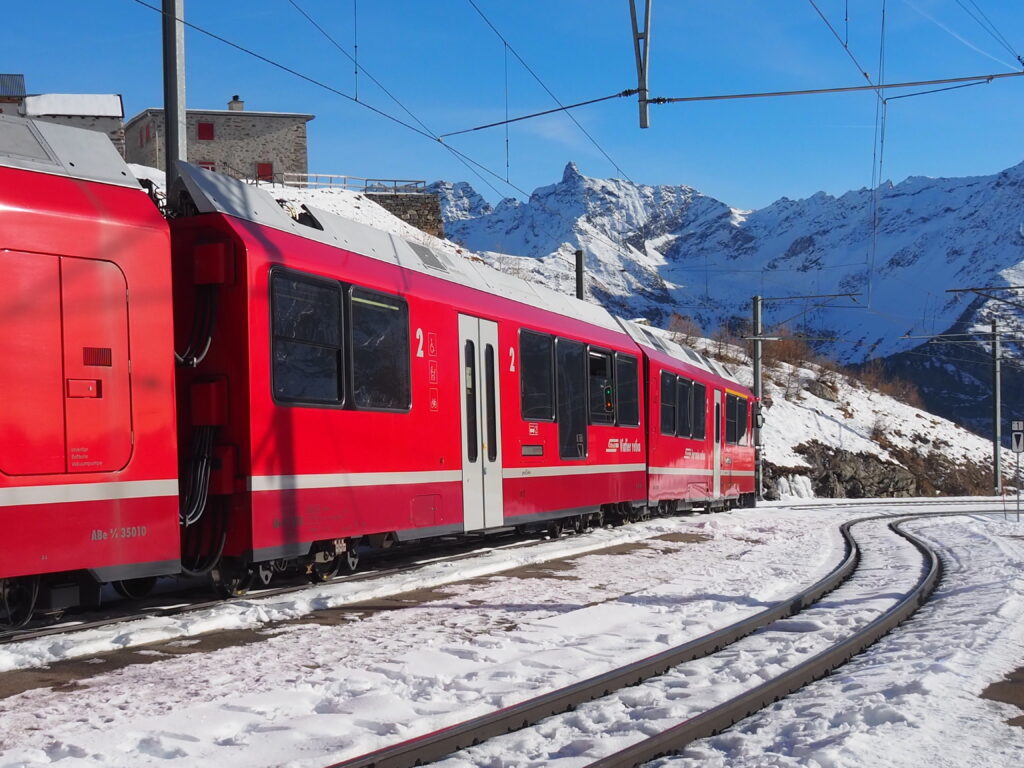
Imagine a land where the rising sun kisses the golden dunes, casting an amber glow that lingers on historic cities teeming with culture and life. Morocco, the gateway to Africa, beckons travellers with its intoxicating blend of tradition and innovation. This is not just a food tour—it is an immersive experience that weaves together the rich tapestry of Moroccan gastronomy, history, and breathtaking landscapes. Allow us to take you on an extraordinary journey, where every taste, smell, and sight tells a story.
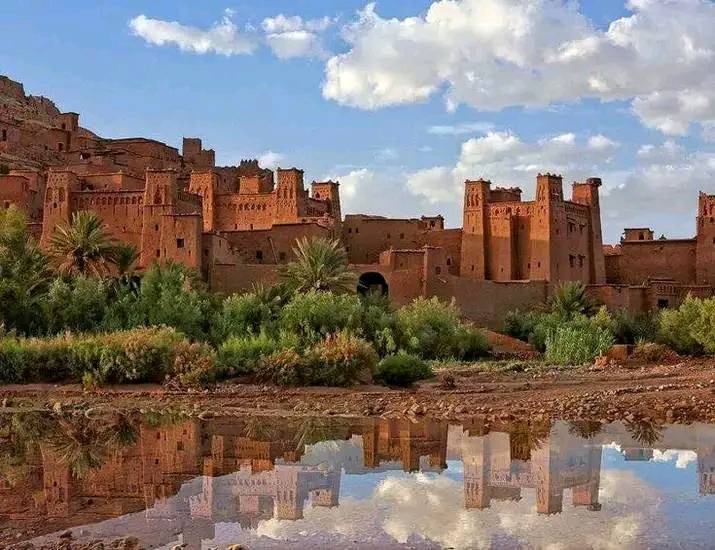
Exploring Moroccan Cuisine

Moroccan cuisine is a mosaic of vibrant colours, fragrant spices, and artisanal techniques honed over centuries. At the heart of this gastronomic adventure lies the iconic tajine—a slow-cooked stew prepared in a conical clay pot. A trip to Morocco would be incomplete without savouring a tender lamb and prune tajine, enriched with caramelised onions, or a chicken tajine infused with preserved lemons and green olives. Vegetarians will find delight in tajines brimming with hearty chickpeas, zucchini, and aromatic herbs.

Spices are the soul of Moroccan cooking, and you’ll find them abundant in the bustling souks (markets) of Marrakech. Ras el hanout, a blend of more than a dozen spices including cinnamon, cumin, and paprika, exemplifies the complexity of Moroccan dishes. Saffron threads from Taliouine and fiery harissa paste are staples to look out for. Let your taste buds dance with the sweetness of Medjool dates, buttery almonds, and honeyed walnuts, staples of Moroccan desserts and snacks.

Immersive Cultural Experiences – Beyond the Plate

Your culinary journey seamlessly intertwines with Morocco’s vibrant culture and history.
Casablanca – The magical city made famous with the words ‘Play it Again Sam’ from the 1942 film of the same name. Explore a modern mosaic of history and glamour as we step into the heart of Morocco’s cosmopolitan soul, a city where shimmering Art Deco facades meet the salty breeze of the Atlantic Ocean. Known for its modern vibrancy and rich cultural tapestry, Casablanca is a canvas painted with bustling souks, grand boulevards, and the iconic Hassan II Mosque, whose towering minaret casts its reflection into the sea. It’s a place that hums with the rhythm of contemporary life yet whispers secrets of Moorish allure. This is the gateway to Morocco, and it invites you to dive into its urban elegance and timeless charm.

We continue our adventure in Fez, a labyrinthine city where history whispers through the narrow alleyways of its UNESCO-listed medina. Here, you’ll stay in riads—traditional Moroccan homes featuring intricate zellige tilework and lush courtyards. Fez also serves as the gateway to the Sahara Desert. Picture this: setting off on a camel expedition into the undulating dunes, where the horizon stretches infinitely, only to camp under a canopy of stars with a nomadic feast awaiting.

Meknes- The Regal City of a Thousand Minarets
Meknes exudes a quieter elegance, often overshadowed by its flashier neighbours, yet it brims with imperial grandeur. Once the capital of Morocco under Sultan Moulay Ismail, it still bears the imprint of his ambitious vision. Spectacular gates like Bab Mansour are masterpieces of intricate tile work, guarding a city steeped in history. Wander through its verdant gardens, discover hidden courtyards, and visit the royal granaries that echo tales of a storied past. Meknes is a gem that whispers rather than shouts, beckoning travellers to linger and uncover its timeless grace.

Ouarzazate- the Gateway to the Sahara
Nestled on the cusp of the vast desert, Ouarzazate is a cinematic dreamscape that has served as a backdrop for countless films. Known as the “Door of the Desert,” this town dazzles with its sun-drenched kasbahs, most famously the Kasbah Ait Ben Haddou—a UNESCO World Heritage site. Terracotta walls seem to melt into the golden sands, while the Atlas Mountains stand sentinel in the background. Ouarzazate is where adventurers find themselves on the threshold of the untamed Sahara, ready to embark on a journey through Morocco’s rugged beauty.

The Sahara Desert – An Eternal Sea of Gold
You cannot imagine the immensity of the desert until you set foot in her sands. Climb to the best viewing point to encounter something quite unique, majestic, and humbling. Here, the dunes rise and fall like waves on an endless golden sea, glowing with an ethereal light at sunrise and sunset. In this vast expanse, time seems to stand still as the wind sculpts the sands into ever-changing forms.
Nights in the Sahara are a spectacle of celestial beauty, where a blanket of stars stretches beyond imagination. Whether on camelback or sheltered in a Berber camp, the Sahara invites you to disconnect from the world and reconnect with its awe-inspiring tranquility.

The Berber nomads, guardians of Morocco’s ancient traditions, embody a zest for life that is deeply inspiring. Their warm hospitality, soulful music, and intricate weaving traditions form an integral part of the country’s identity. As you sip mint tea—a symbol of friendship—and listen to their captivating tales, you’ll feel a deep connection to their enduring way of life.


Marrakesh – The Jewel of the Red City
Marrakesh enchants like an opulent tapestry woven with vivid threads of culture, history, and mystique. Known as the ‘Red City,’ its ochre walls rise like a desert mirage beneath a cobalt sky. The heart of Marrakesh beats in the lively Jemaa el-Fnaa square, where hypnotic snake charmers and fragrant food stalls come alive under the glow of lanterns. Wind your way through labyrinthine alleys of the medina, where the clink of artisan hammers and the rich aroma of spices fill the air. Marrakesh is not just a destination, it is an experience that immerses you in a kaleidoscope of colours, flavours, and sounds. The maze-like souks display colourful piles of saffron, cumin, and turmeric, something for every adventurous cook.  This is also the perfect place to pick up your very own tajine pot—a souvenir that lets you recreate the magic of Moroccan cuisine at home.

The Allure of Moroccan Sunsets and Timeless Landscapes

The sunsets in Morocco are nothing short of poetic. Picture yourself standing on the crest of a dune in Merzouga, watching the sun sink below the sands, casting hues of ochre and crimson across the desert expanse. In the High Atlas Mountains, verdant valleys give way to rugged peaks, creating a dramatic backdrop for your journey.

From Chefchaouen’s blue-washed streets to the ancient kasbahs of Aït  Ben Haddou, every corner of Morocco is steeped in stories waiting to be uncovered. Your camera will fill with snapshots of timeless beauty, but nothing compares to the memories you’ll carry within.

Essential Travel Tips for Your Moroccan Adventure

  1. When to Visit: The best time to travel is during spring (March to May) and autumn (September to November), when the weather is pleasantly mild.
  2. Currency: The Moroccan dirham (MAD) is the official currency. Local markets often prefer cash, so it’s wise to carry small denominations.
  3. Language: While Arabic and Berber are widely spoken, learning a few phrases like “Shukran” (Thank you) and “Salam Alaykum” (Peace be upon you) will endear you to locals.
  4. Attire: Modest clothing is appreciated, particularly in rural areas and religious sites.

Why Join Us?

This is more than a tour—it’s an odyssey into the heart of Morocco’s culinary and cultural soul. Every dish tells a tale of heritage; every spice speaks of journeys along the ancient trade routes. Together, we will embrace the rhythm of Moroccan life, explore its storied past, and immerse ourselves in its unparalleled beauty.

Let us ignite your wanderlust and inspire your palate. Join us for an unforgettable adventure—where the food, the people, and the land will leave an indelible mark on your spirit.